

I didn’t even do anything in Muse before I started feeling sus… here’s what happened:
I get an idea in my mind, “You know what would be really interesting to test out is Meta’s Muse and I bet people would love to see what happens and how well it works”
Should be all good right?
I’m not kidding when I tell you I barely got to the start page before I started to have serious concerns about my data and privacy.
Linking your account immediately to the facebook profile that you connect comes with a whole host of interesting realities. Because I chose to connect Muse through the same Accounts Center as my Facebook profile, Meta says it may combine information across profiles and devices, except where Muse’s specific privacy policy limits that use. That alone gave me pause. By default, Muse opts your interactions into training Meta’s AI models unless you turn that setting off. Meta says changing the setting also applies to previous interactions.
And that’s before you even get into the actual interface. I’ve talked to several Marketing & Social Media coordinators who have become day one users who already have an interesting experience at the time saving realities it has provided: creating documents, updating calendars, connecting to services with surprisingly a very forward facing “ARE YOU SURE YOU WANT TO CONNECT THIS SERVICE” messaging.
Well that can’t be that bad then…
I get in there and start familiarizing myself with all the sections and seeing whats here and we’ve got the “ideas” menu which can give you a host of things they recommend muse can do for you. And immediately what strikes me as odd is the health suggestions.
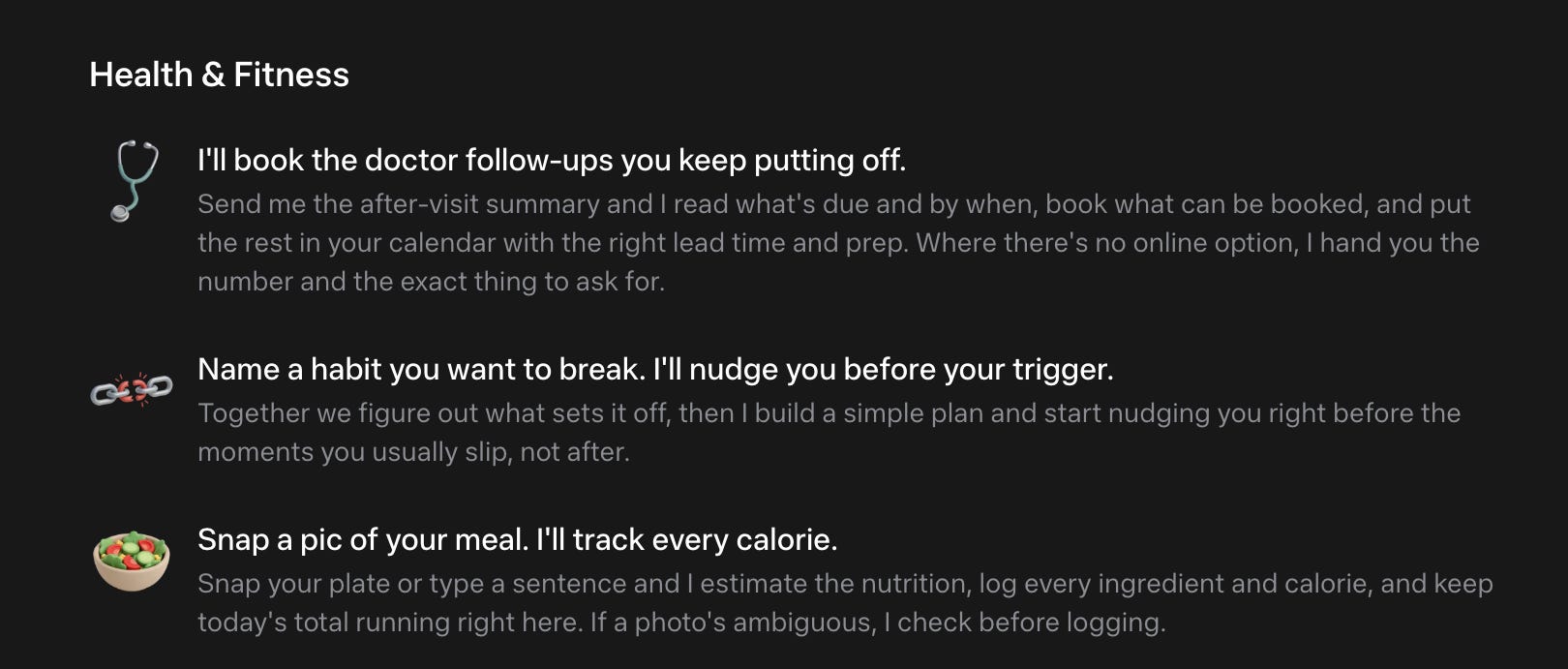
Most likely some of you reading this either have an Apple watch, Oura ring, or some tracker that lets you know you’re on pace to beat your high school mile record. The promise is that those devices and services are keeping your data safe and that it is not being pawned off to 3rd party data brokers or being trained on AI without your consent. But when I see a company recommend you give it health information that is not a healthcare provider I get really concerned about the weaponization of data if it escapes the context it was intended for.
This isn’t a far off reality either, third party brokers have been selling health data for years.
In the off chance that this data gets to a data broker who then sells it to an insurance company that now knows more information about you, who’s to say decisions couldn’t be influenced on how people are assessed, marketed to, or insured?
Does that mean that Meta is selling my Muse health data to my insurance company? No. Meta’s own policy says Muse conversations and data aren’t shared with Meta ad systems and I haven’t found evidence that Muse is selling health data to insurers.
But honestly, I didn’t even use the program and this is how it made me feel. What does that say about giving Muse any of my data?
Have you used Muse yet and did you have a similar or different experience? Let me know in the comments below.




Leave a comment